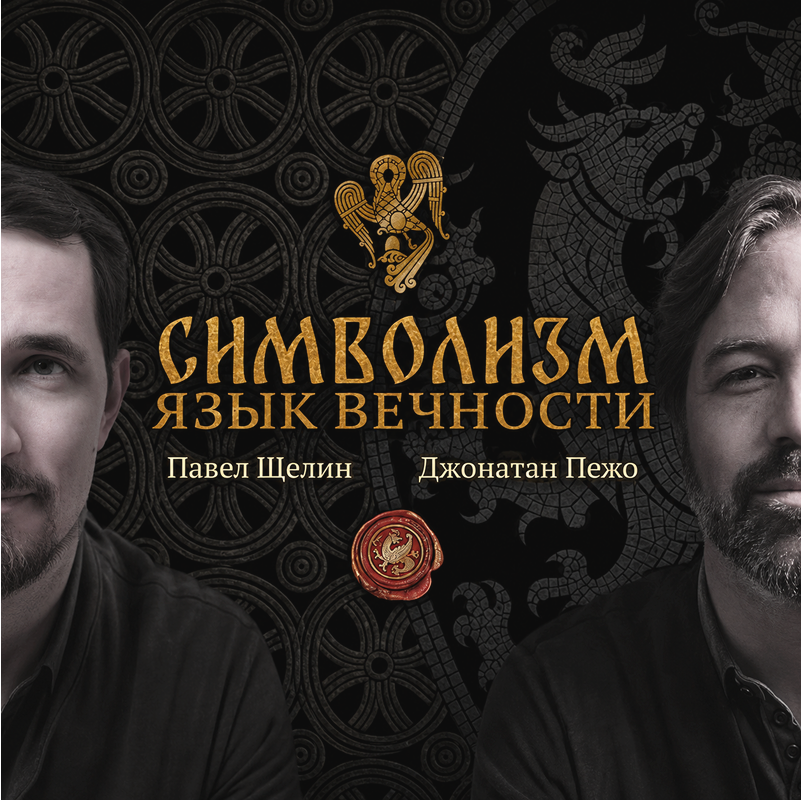
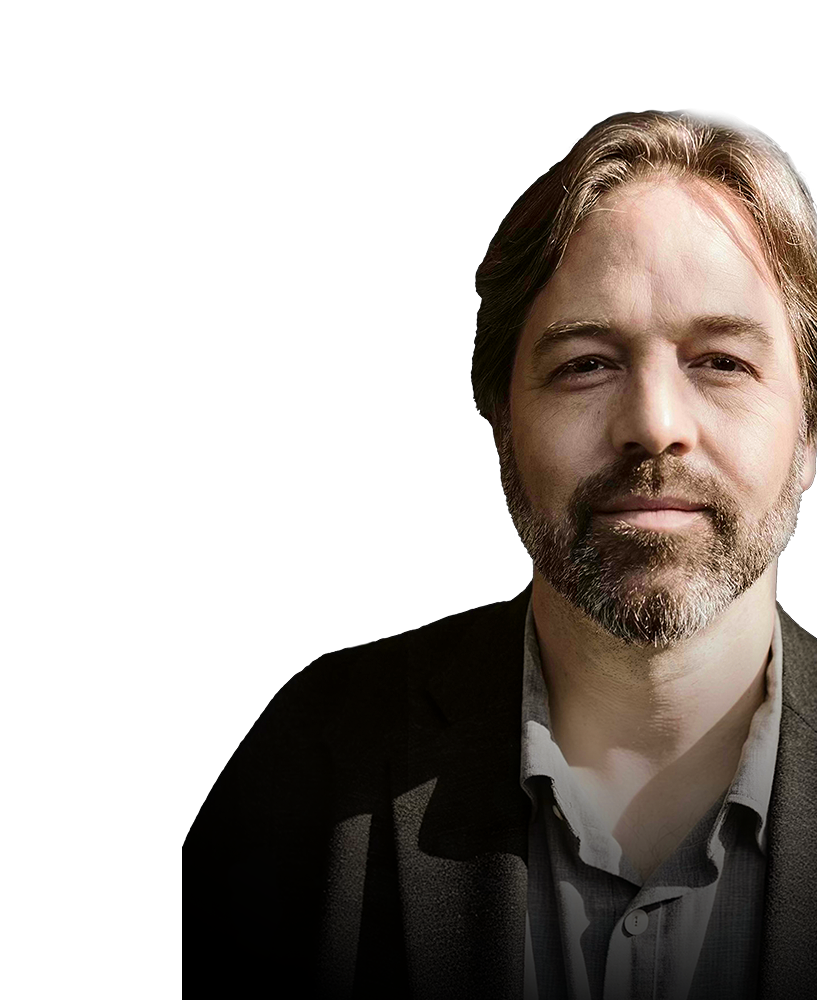

Jonathan Pageau is a Canadian Orthodox Christian artist and lecturer whose Symbolism Masterclass has been viewed millions of times worldwide.
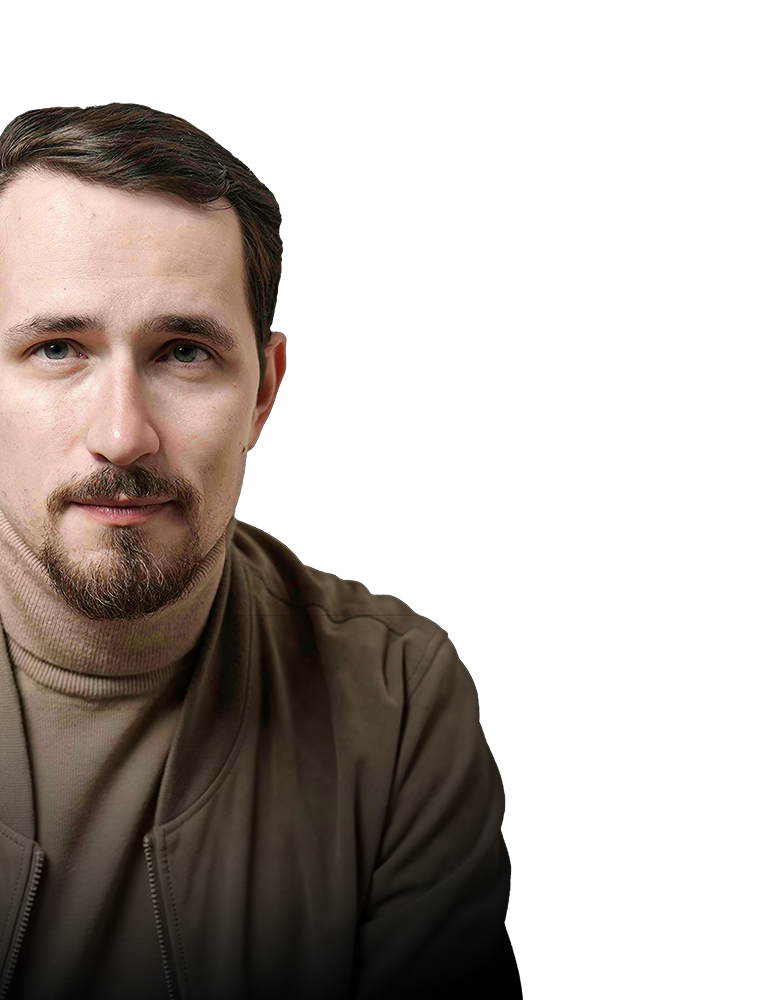
Pavel Shchelin is an Orthodox political theologian — one of the most substantive and widely followed public intellectuals in the Russian-speaking world.
This course is their conversation: five weeks of video lessons and live discussion that give you the foundations of symbolic thinking — the language in which Scripture, history, liturgy, and the world itself are written.
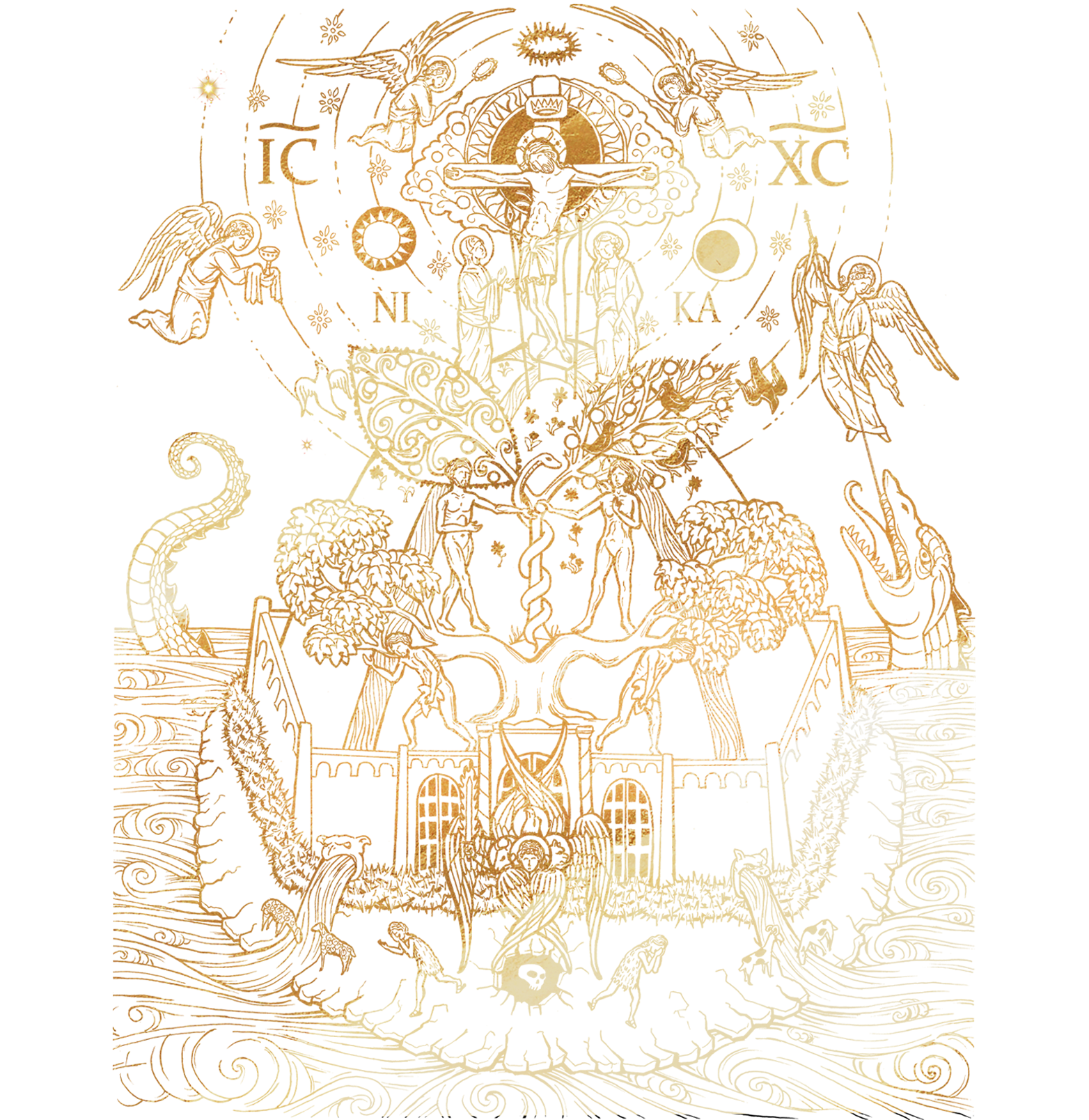

The Lord’s Prayer is spoken every day bymillions, yet it is read in two different languages. In the language of theletter — it is a request for bread and protection from evil. In the language ofeternity — it is a map of the structure of being: the vertical of heaven andearth, the name as the union of Logos and multiplicity, the kingdom as theorder of reality.
In this lesson, Jonathan and Pavel show, through a familiarprayer, how an ordinary word comes alive when read symbolically — and why thislanguage was native to our ancestors but has become foreign to us. The firstlesson does not merely introduce the course — it awakens symbolic vision.

Reality has a vertical structure, and our task is to see it. In this lesson, Jonathan and Pavel reveal the geometry of the symbolic world: how heaven meets earth in every object, in every action, in every day; how the temple repeats the cosmos, how the home repeats the temple, how the human soul repeats the home. The architecture of reality is where the eternal meets the everyday — and it meets everywhere.
Hierarchy does not necessarily imply tyranny —it is how meaning finds its order in a person, a society, a worldview. Everyreality has a summit toward which it turns — that which it serves, that whichdetermines its order.
Modern man thinks he has rejected hierarchy, but he hasmerely replaced its summit: now it is money, status, desire, ideology. In thislesson, Jonathan and Pavel show how a single fractal unfolds at every level ofreality — and pose the most honest question symbolism can ask: what stands atthe summit of my attention? What god do I actually pray to?
Reality is not homogeneous. It is woven frompairs of opposites: the one and the many, center and periphery, masculine andfeminine, heaven and earth.
These pairs can tear the world apart — or bind ittogether. In this lesson, Jonathan and Pavel show through the image of thecherub and the vision of Ezekiel that opposites dance: their unity comes notfrom suppressing one side but from a rhythm in which each carries its ownvoice. When man and woman, center and periphery, the one and the many no longerdance, war begins.
After the fall, man received from God garmentsof skin — an image of civilization born of catastrophe yet blessed from above.City, law, art, technology — all of these are our garments of skin: that whichconceals our nakedness before the eternal — yet binds us.
The final lessongathers the course together: the story of the fall unlocks modernity, and thequestion of artificial intelligence extends the very question God posed to Adam— in consolation and in reminder.
When does technology serve us, and when do webecome its hostages? How do we live symbolically in a world where modernitytaught us to answer “how?” — and bracketed the question “why?”.
Reality reflects eternal patterns — of perception, of history, of the soul. They are written in the language of symbolism, the language of eternity. This language answers not “how?” but “why?”. Modernity taught us to stop asking questions of purpose. We have been taught not to notice it.

Pavel Shchelin came to symbolism as a philosopher. He began with Western political thought and Russian religious philosophers — Nesmelov, Ern, Losev, Kireevsky — and from there turned to the Fathers of the Church, above all to St. Maximus the Confessor. His lectures, podcasts, and public conversations have made him one of the most important thinkers in the Russian-speaking world today. In his work, he seeks the meaning of what is happening to us — asking the same question: “What does it mean?”
Jonathan Pageau came to symbolism as a craftsman. A francophone Canadian from Quebec, he mastered icon carving, and from there turned to the Fathers of the Church, above all to the same St. Maximus the Confessor. The turning point was Vladimir Lossky’s The Mystical Theology of the Eastern Church. Over twenty years, Jonathan built the alphabet of symbolic language for the English-speaking world.
They set out from opposite shores — Russian philosophy, Quebec icon-carving — and arrived at the same place. They speak the same language. The language of Symbolism.In the first lesson, Pavel openly admits: “I do not live symbolically. I am just as fragmented a person as you are.”
Jonathan and Pavel are not merely teachers. They are witnesses — people who have walked this path a little further and now return to show us how to read what is happening to us.

Over 5 hours of video, including 2.5 hours of Jonathan Paugeau’s original material. New episodes air every Friday, starting August 28 at 20:00 (Moscow time) and continuing on September 4, 11, 18, and 25.
Every episode is followed by live Q&A sessions with Pavel on Wednesdays, September 2, 9, 16 and 23 at 20:00 (Moscow time)

DoubleSuited is an independent intellectual production house. We produce long-form content — video courses, podcasts, and documentary projects — at the intersection of Orthodox theology, philosophy, and cultural history. Substantive content for those who seek it.
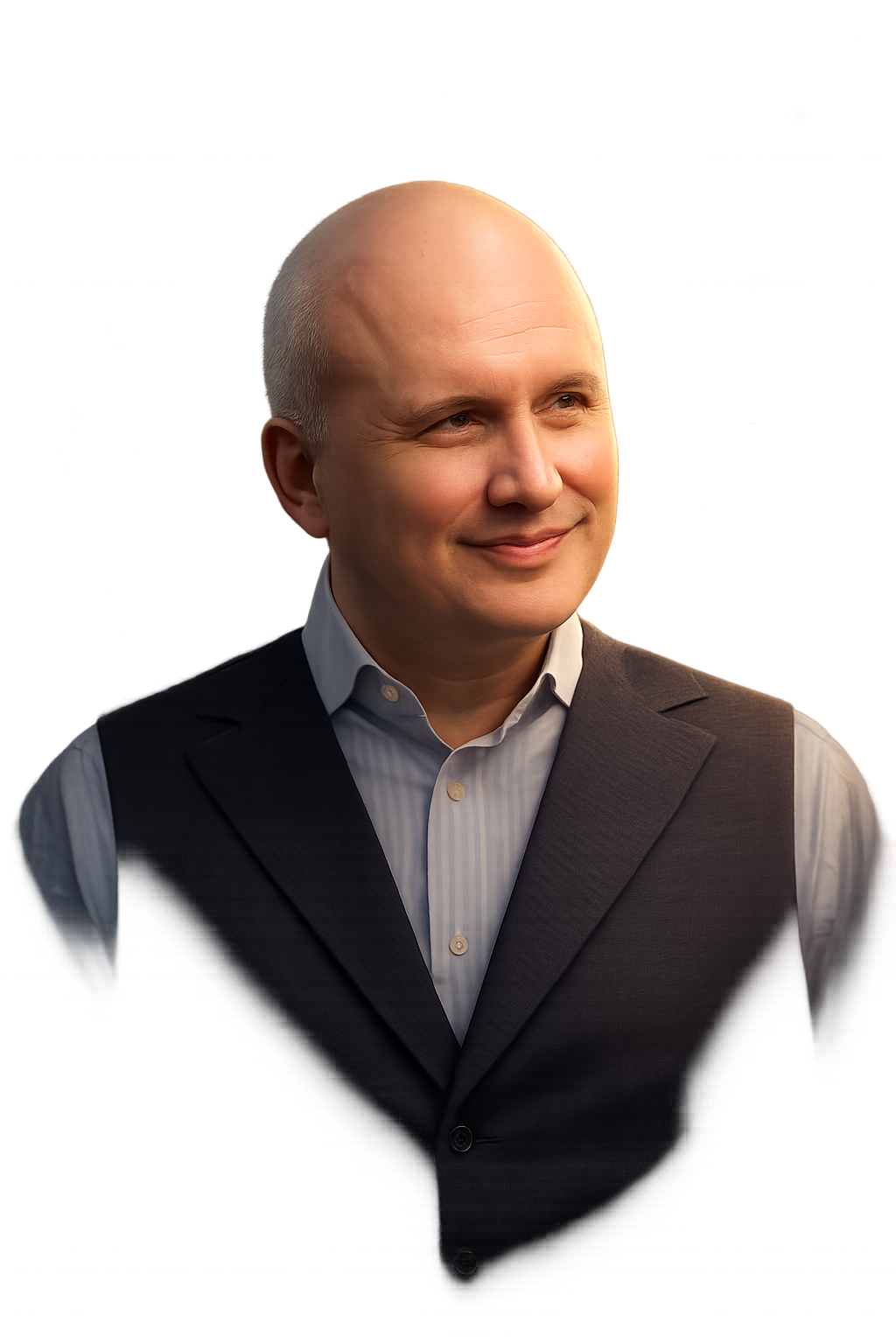
Bachelor of Psychology andPhilosophy, Georgia State University. MBA, Georgetown University. For overtwenty years I worked in the international energy business — bringing power tothe people, electrical power that is. But education and career do notanswer the essential questions.
Wandering through the labyrinth of modernity —between university lecture halls, corporate offices, and international airports— I discovered that my own life had lost what our ancestors called purpose. Iknew how the world worked. I did not know why it was made.
In the work of Pavel Shchelin and Jonathan Pageau I found the language Ihad been missing. Not a theory about meaning — but meaning itself, present inevery day and in every event. This course is my attempt to pass on what wasrecently given to me.